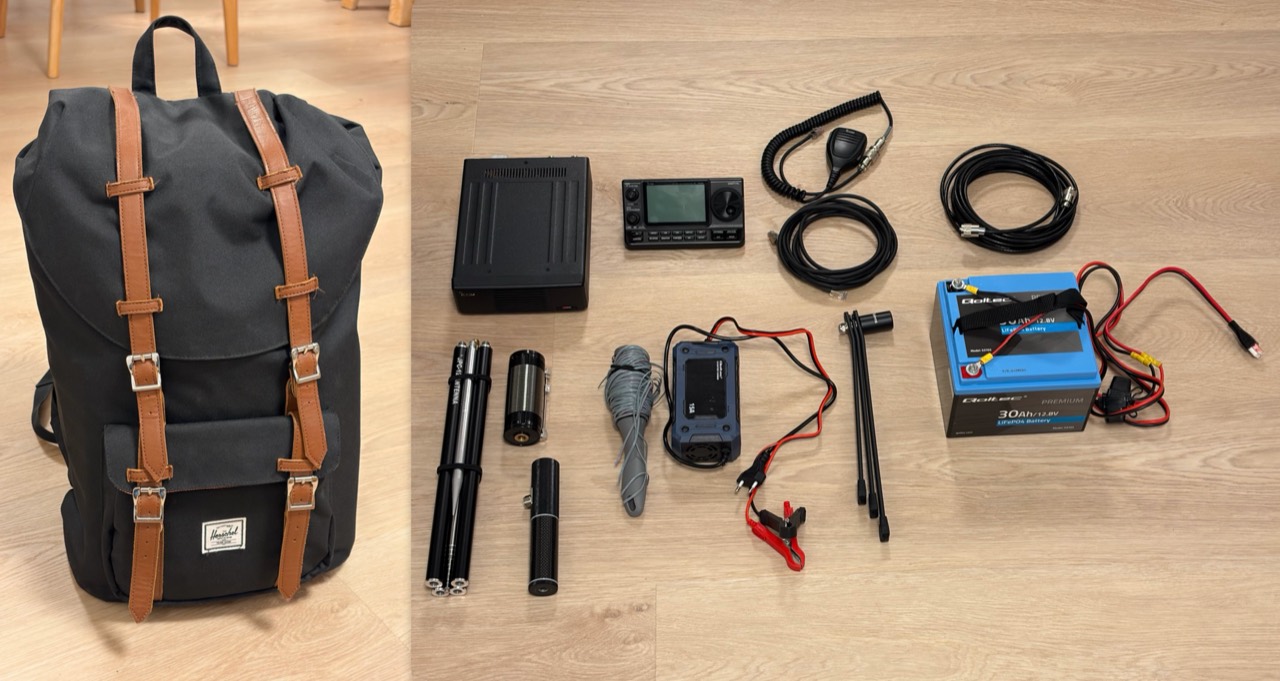
One of the things I enjoy most about amateur radio is the freedom to take my equipment somewhere else and get on the air. My portable ham radio backpack is a way of keeping that equipment together. There’s something special about sitting outside with a radio, a portable HF antenna and a battery, making contacts with people hundreds or even thousands of kilometres away.
As a relatively new HF radio amateur, I’ve gradually been experimenting with different ways of operating away from home. I’ve tried my equipment on the terrace, at a summer house, on the Danish island of Samsø and in the forest. These experiences made me realise that I wanted a portable amateur radio station that would be easy to bring along whenever I had a little spare time.
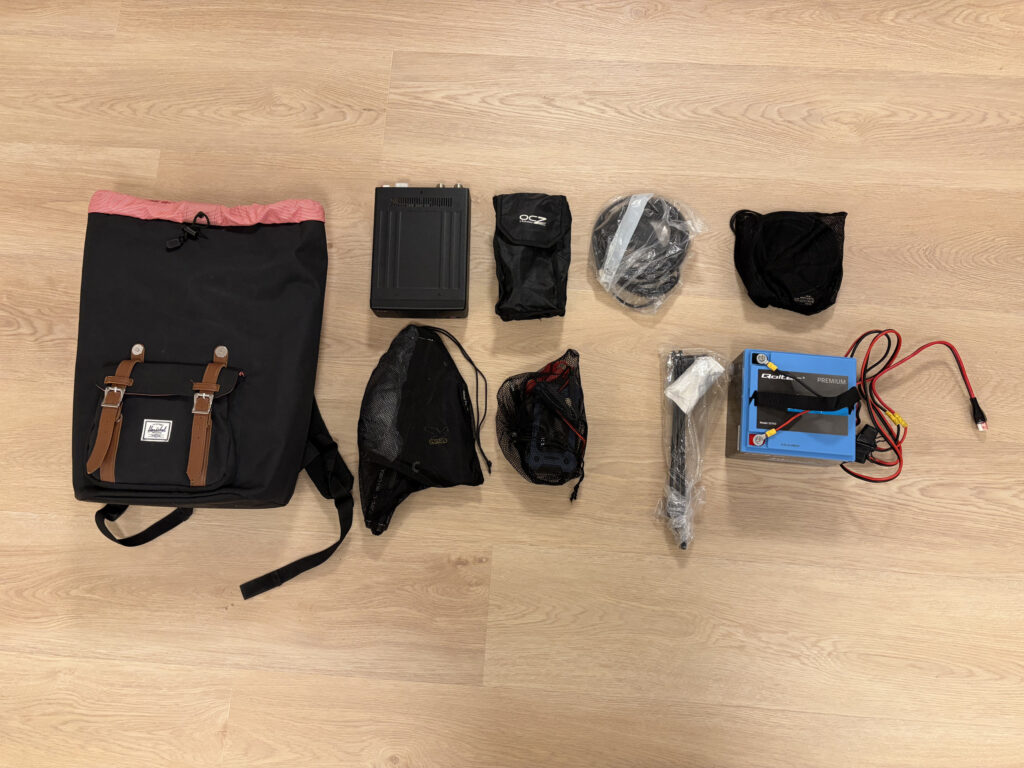
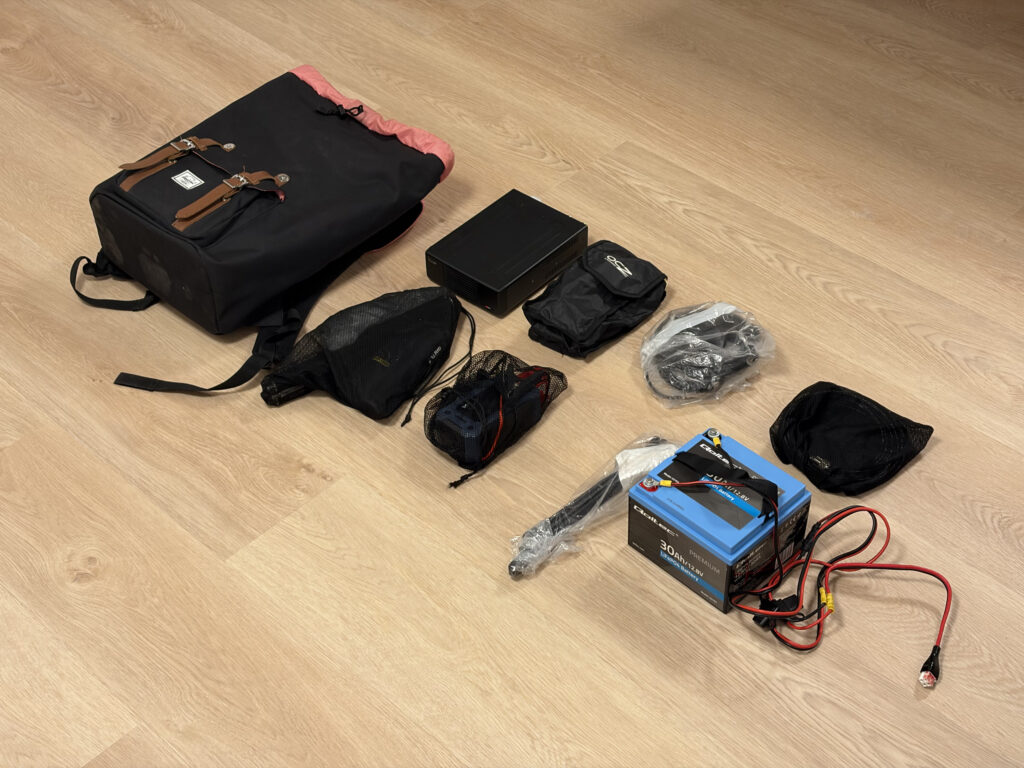
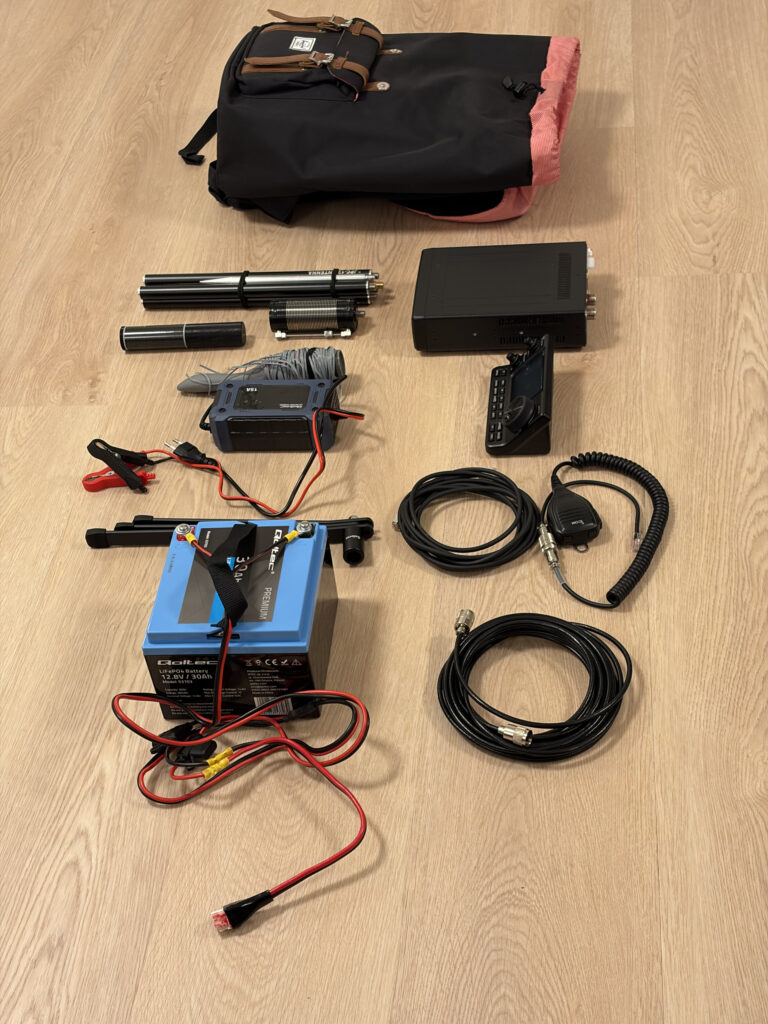
Rather than buying a large, specialised ham radio backpack, I decided to see how much equipment I could fit into an ordinary 17-litre Herschel Little America Mid backpack. And perhaps a little surprisingly, I’ve managed to use it for a complete portable HF setup with my Icom IC-7100 transceiver, JPC-12 vertical antenna, 30Ah LiFePO4 battery, Qoltec charger, coaxial cables and various accessories. It’s certainly not an ultralight QRP station, and carrying a full-size HF transceiver and a substantial battery involves some compromises. But I wanted something that would allow me to operate SSB with more than just a few watts, without having to transport several separate bags and boxes.
This isn’t a professional equipment review or a guide to building the perfect portable radio station. It’s simply my own experience putting together a portable ham radio go-kit, along with some practical observations about radios, batteries, antennas, cables, weight and the little things that make portable operating more enjoyable.
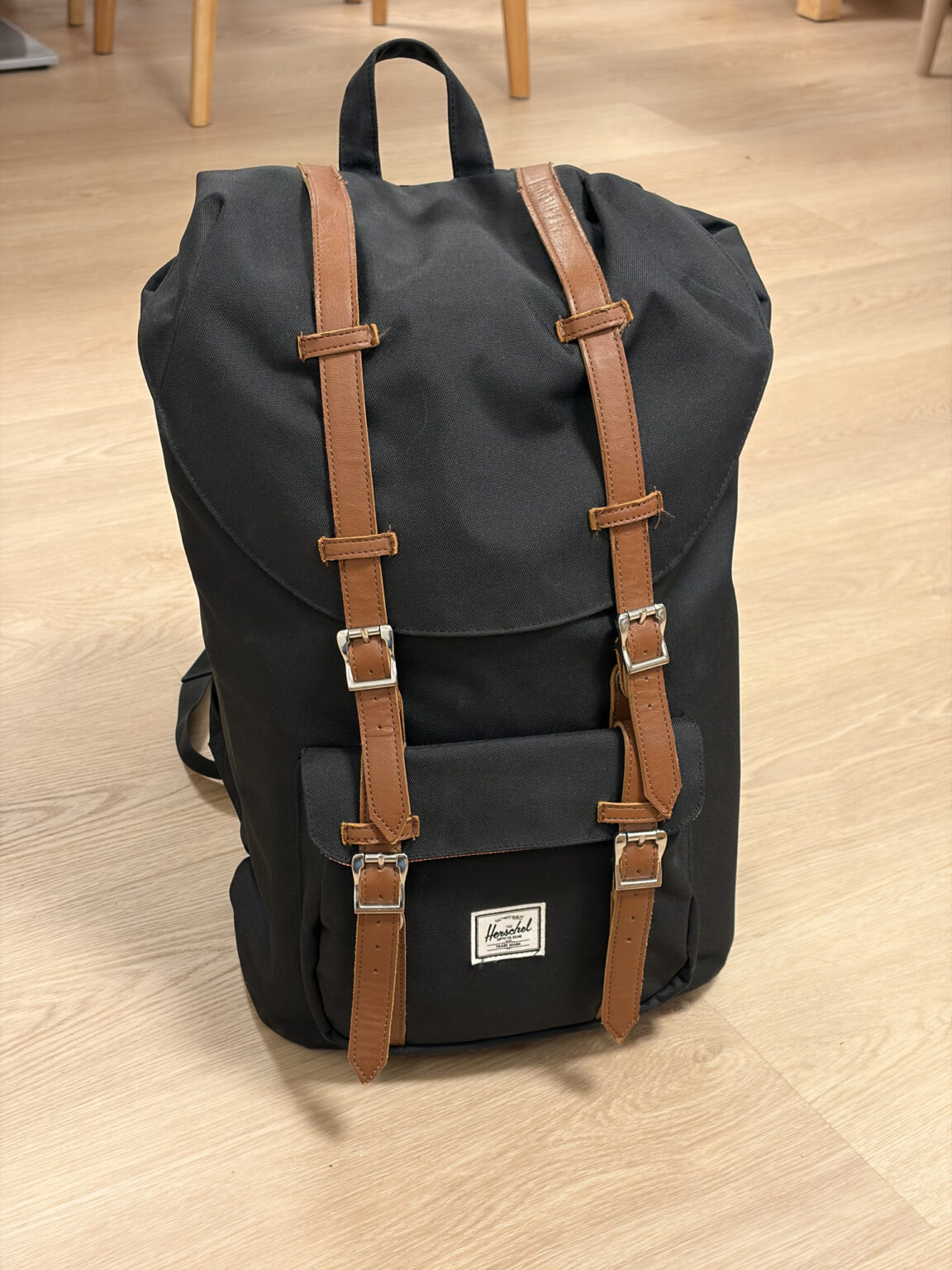
The backpack
My backpack has a capacity of around 17 litres. It’s a fairly ordinary backpack, intended for everyday use rather than carrying amateur radio equipment. But I already liked the idea of having something compact and simple that didn’t look like a large technical equipment bag.
When I started collecting the equipment for my portable HF station, I quickly discovered that the biggest challenge wasn’t necessarily the radio itself. It was everything that needed to accompany it. A transceiver requires a power source, an antenna, coaxial cable, connectors, a microphone and sometimes a surprising number of smaller accessories. If you’re not careful, a simple afternoon of amateur radio can turn into a small moving operation.
My goal was therefore to keep as much as possible together in one backpack, so I could simply pick it up and take it with me. The Herschel has a straightforward shape, which I find useful when packing equipment with relatively square dimensions, such as a radio and battery. The Icom IC-7100 also helps because the main unit and control head are separate, giving me some flexibility when organising the available space.
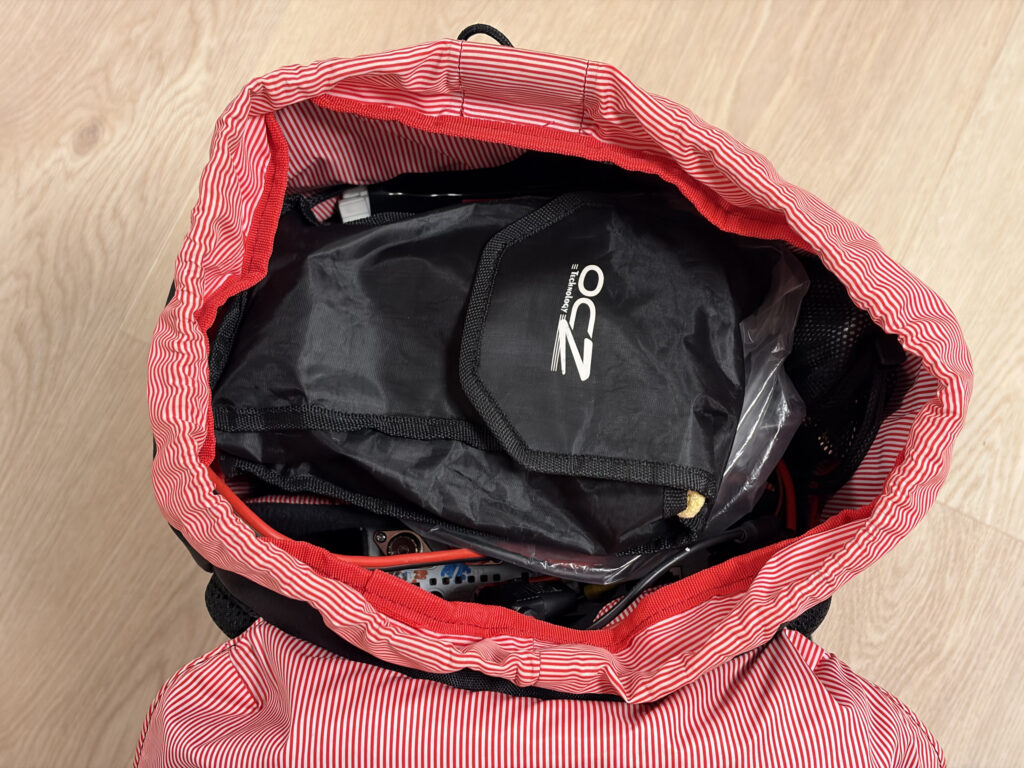
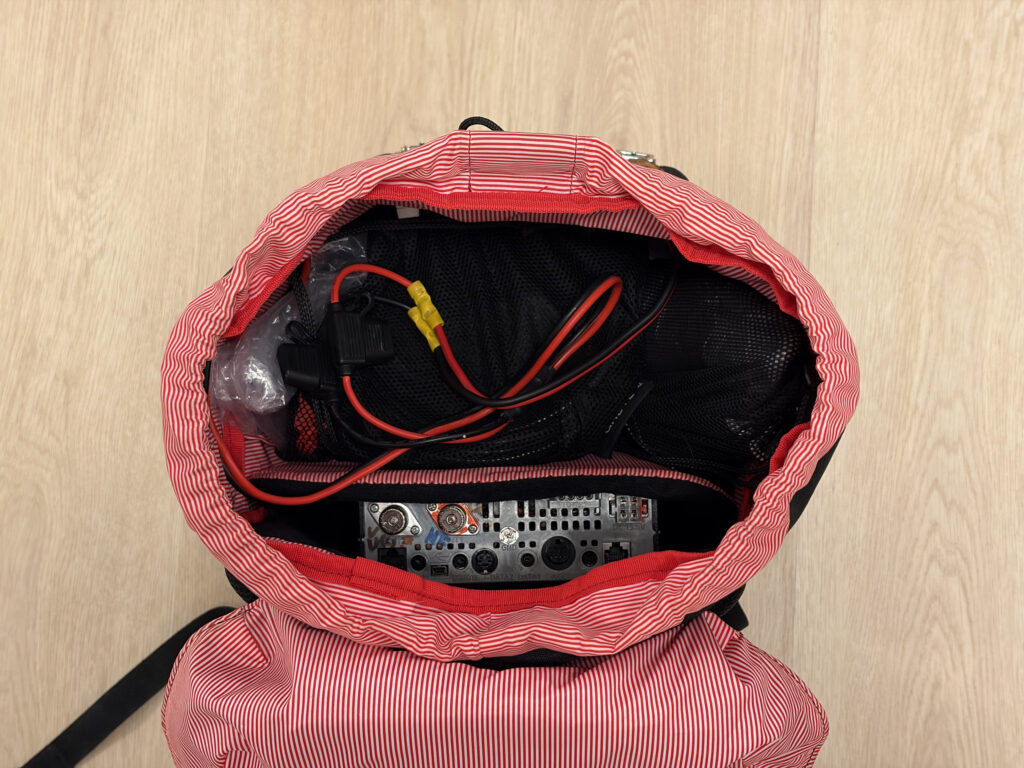
Of course, fitting everything inside doesn’t automatically mean it’s comfortable to carry. There’s a considerable difference between transporting a backpack from the car to a nearby picnic table and carrying the same equipment several kilometres through a forest. This everyday backpack isn’t designed to carry heavy loads over long distances, and with relatively heavy radio equipment inside, both weight distribution and protection of the equipment become important.
For my kind of portable operating, however, the idea works quite well. I’m generally not planning to climb mountains or hike all day with the radio on my back. I want to be able to visit a park, a quiet location outside town or somewhere near the coast, unpack my station and enjoy making HF contacts. And there’s something rather satisfying about knowing that an ordinary little backpack contains almost everything needed to set up a working amateur radio station.
The Icom IC-7100
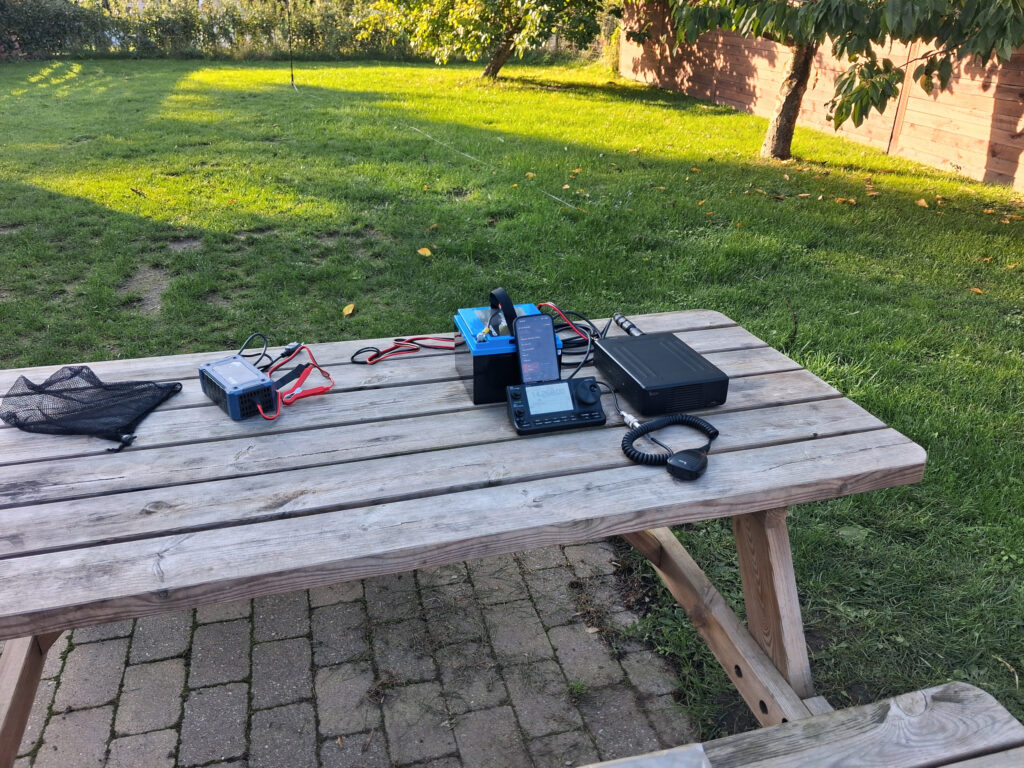
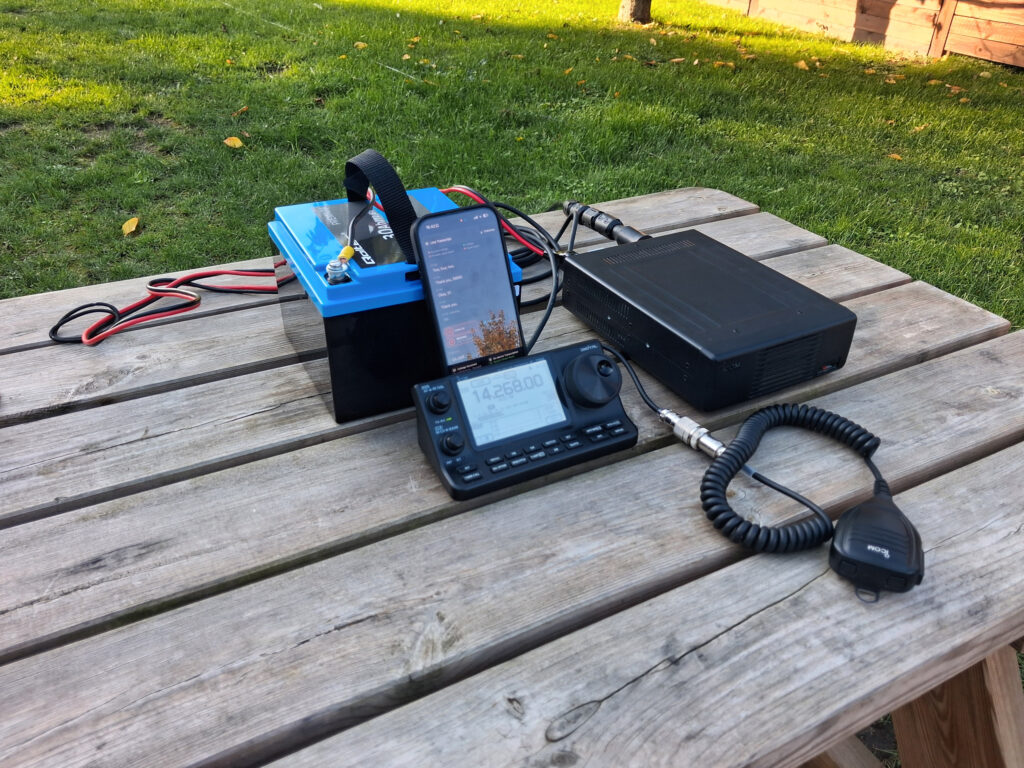
The central part of my portable setup is my Icom IC-7100, a transceiver covering HF, 6 metres, VHF and UHF. Although it wasn’t specifically designed as a lightweight backpacking radio, I think it makes an interesting choice for portable operation because of its relatively compact main unit and detachable control head.
The IC-7100 supports SSB, CW and several digital operating modes, and it can deliver up to 100 watts on HF, as described in Icom’s IC-7100 specifications. For me, SSB voice communication is particularly interesting. I enjoy listening to stations from other countries, trying to understand propagation conditions and occasionally calling CQ to see who might answer.
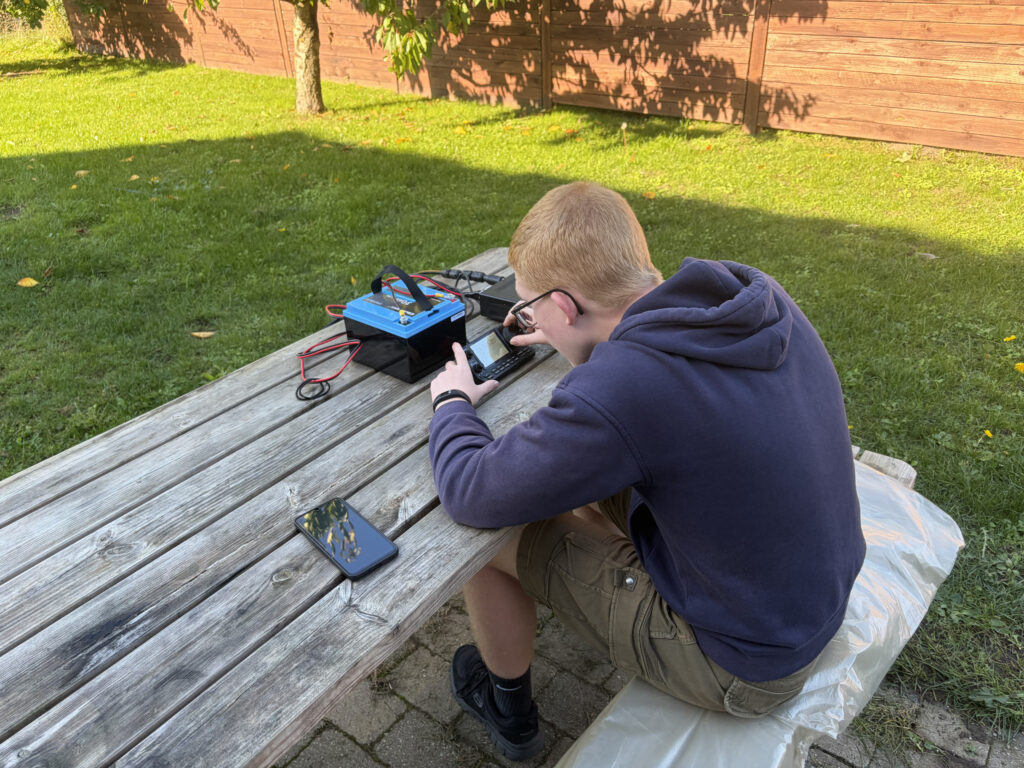
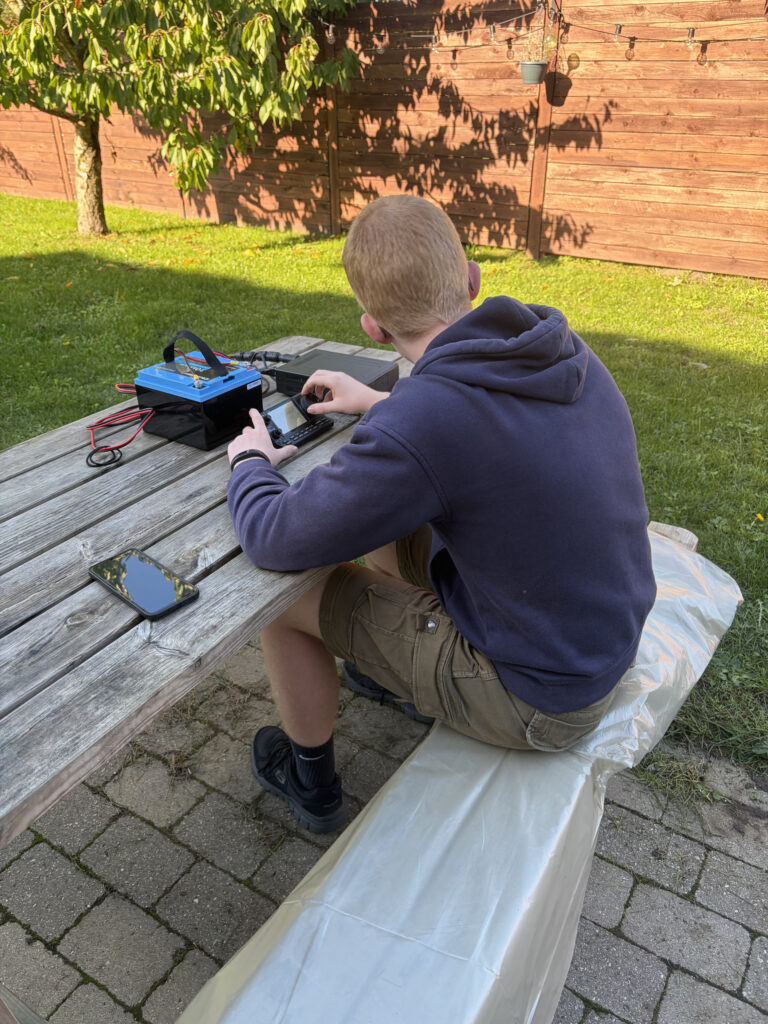
One advantage of the IC-7100 is that I don’t have to buy a separate portable HF radio just to operate outdoors. It’s the same radio I use for my other amateur radio activities, so I’m already familiar with its controls and menus. The separate control head also makes it practical to arrange a temporary station on a garden table or other small operating surface.
A smaller QRP transceiver would generally consume less electricity and be much easier to carry. I’ve also been interested in compact radios such as the QRP Labs QMX+, but for this particular backpack setup I wanted to use the equipment I already own. The IC-7100 provides the flexibility to operate with lower power when conditions are good and increase it when necessary.
There are some compromises. The radio requires a suitable external DC power source, and unlike certain other transceivers, it doesn’t include a built-in automatic antenna tuner. This means that my portable antenna must be adjusted properly before transmitting. Fortunately, the JPC-12 antenna I use can be tuned mechanically for different amateur bands, making it a practical companion for the IC-7100.
For someone who is still learning about HF radio, I find this combination quite enjoyable. It allows me to experiment with antenna tuning, SWR, output power and propagation while using a radio that can also serve as a normal home station.
Portable Power – Qoltec 30Ah LiFePO4 Battery and Charger
Power is probably one of the most important considerations when putting together a portable HF radio station. A radio like the Icom IC-7100 can draw a substantial amount of current when transmitting at higher power levels, so a small battery intended for a five-watt QRP radio isn’t necessarily sufficient.
For my portable setup, I use a Qoltec 30Ah LiFePO4 battery. Its nominal energy is approximately 384Wh, as listed in Qoltec’s battery specifications. I wanted enough battery capacity to enjoy an afternoon of radio activity without constantly worrying about whether I would have enough power for the next contact. The battery is relatively large for a backpack station, but it gives me more flexibility than a smaller portable power pack.
LiFePO4 batteries have become popular among radio amateurs because they offer a useful combination of energy capacity, weight and long service life. Compared with traditional lead-acid batteries of similar usable capacity, they can be substantially lighter, making them attractive for portable HF, field-day and POTA operating.
My battery contains a Battery Management System, or BMS, which provides protection against conditions including overheating, overcharging and deep discharge. However, that doesn’t mean it’s impossible to damage equipment or that the battery can safely supply any amount of current. I still need to make sure that the battery, connectors, cables and fuse are suitable for the current required by the IC-7100.
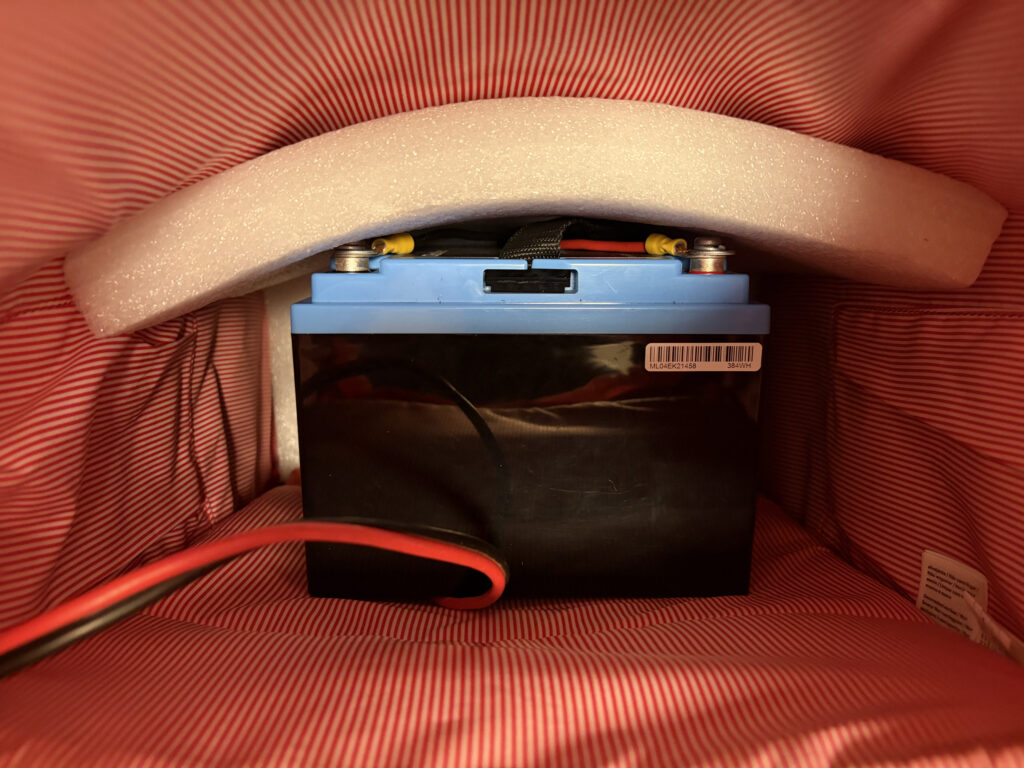
A LiFePO4 battery also has a changing voltage depending on its state of charge. That’s worth remembering with a radio designed around a nominal 13.8V supply. Both the operating voltage and the battery’s ability to deliver sufficient current are important, particularly when transmitting at higher power.
One question that naturally comes up is how long a 30Ah LiFePO4 battery will power an HF transceiver. The answer depends heavily on how the radio is being used. Listening to other stations consumes much less energy than transmitting continuously at high power. SSB also has a varying current demand because the transmitted signal changes with the voice modulation.
In my case, I usually spend quite a lot of time listening between contacts. I’m not transmitting continuously, and I don’t necessarily need 100 watts for every QSO.
I also keep my Qoltec 15A LiFePO4 battery charger with the equipment. The charger isn’t something I need while sitting in the forest operating from battery power, but it’s convenient to have it available when visiting a summer house or staying somewhere overnight with access to electricity.
Keeping the charger in the backpack adds weight, and I could easily leave it at home for a short outing. But I like the idea of having the complete power system together, rather than discovering that I’ve forgotten the charger when I need it.
My JPC-12 Portable HF Vertical Antenna
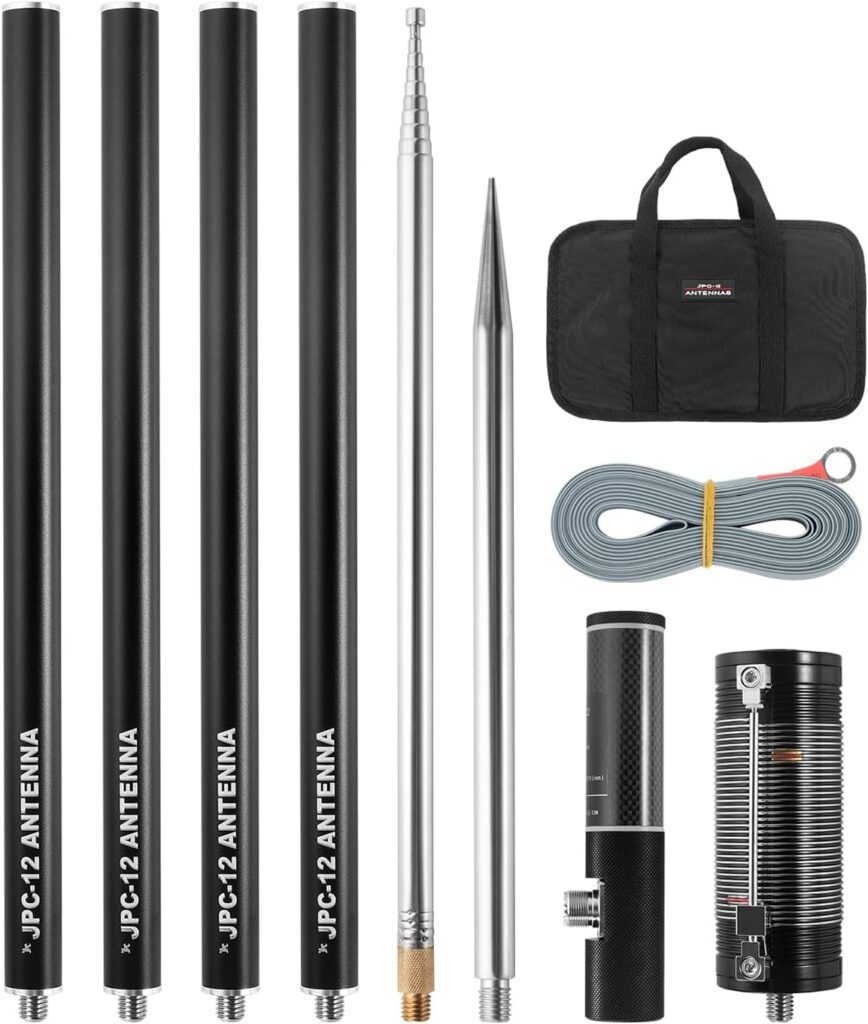
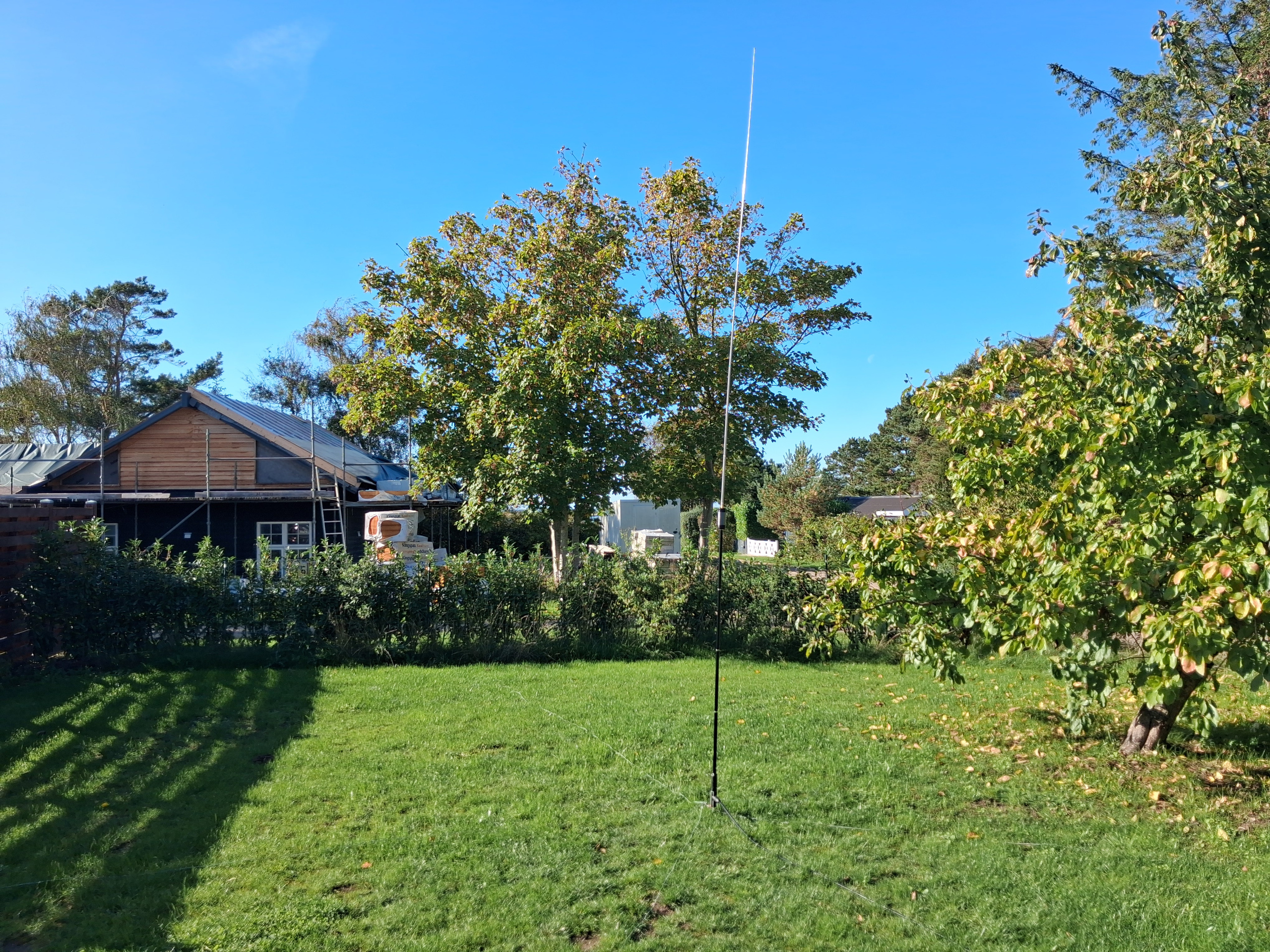
A portable HF radio station isn’t much use without a suitable antenna, and this is where my JPC-12 portable multiband vertical antenna comes into the picture. The JPC-12 is a compact antenna consisting of aluminium sections, a telescopic whip, an adjustable loading coil and a ground radial system.
When dismantled, the antenna takes up relatively little space compared with a conventional full-size HF antenna. When assembled, it becomes a vertical radiator approximately four metres tall, depending on the configuration. The loading coil and adjustable whip make it possible to operate on several HF amateur bands, including the popular 40, 20, 17, 15 and 10 metre bands.
I’ve become quite fond of this antenna because it doesn’t require a large permanent installation. I can put it in the ground using the supplied spike or use a small tripod when operating on a paved or similarly hard surface. This makes it useful in several different locations, from a garden or terrace to a forest clearing.
On 20 metres, I’ve managed an SWR of approximately 1.2–1.3 around 14.2 MHz. A low SWR doesn’t necessarily tell you how efficiently an antenna is radiating, but it does indicate that the antenna can be adjusted to provide a suitable match for the radio.
An important part of the JPC-12 system is its ground radials. My radial wires are approximately five metres long, and I spread them around the antenna as the location allows. These wires provide an RF return path and influence the antenna’s performance, so they’re more than just an optional accessory.
I also found a surprisingly simple way to keep the radial wires organised. Instead of letting several metres of wire become tangled inside the backpack, I use the handle from an ordinary lint roller as a winding support. It’s a cheap and practical solution, and it makes packing up the antenna considerably less troublesome.
I’ve written a separate article covering my experiences with the antenna, including real-world operating locations, tuning information and the importance of ground radials: My JPC-12 (PAC-12) Portable HF Vertical Antenna – From My Terrace to the Forest.
For anyone considering a portable HF antenna for POTA, camping or general outdoor amateur radio, I think the JPC-12 is an interesting option. It certainly has limitations compared with larger antennas, particularly on lower frequencies, but its compact size and relatively straightforward setup suit my backpack station well.
Coaxial Cable, Power Connections and Other Portable Radio Accessories
One thing I’ve learned while putting together my portable station is that cables and connectors deserve more attention than they initially seem to. It’s easy to spend hours comparing radios and antennas, only to discover that you’ve forgotten a power cable, an adapter or some other small but essential component. When you’re operating outdoors, you can’t always return to the shack and collect the missing item.
My backpack therefore also contains the coaxial cable used to connect the IC-7100 to the JPC-12 antenna. For portable operating, I use approximately five metres of coax, which gives me some flexibility when positioning the antenna away from the operating table.
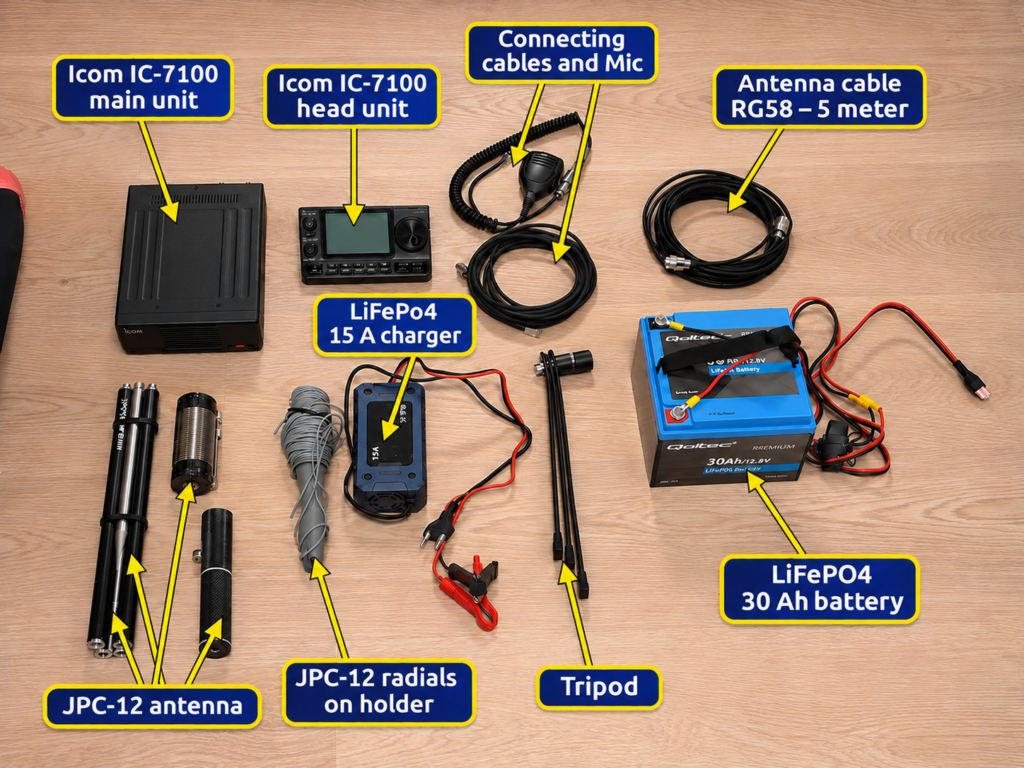
At home, I’ve experimented with different coaxial cable types, including RG-213, RG-58 and Aircell 7. These cables have different properties in terms of attenuation, diameter, flexibility and weight. A thick, low-loss cable may be an excellent choice for a permanent installation, but it isn’t necessarily the most convenient solution when everything must fit inside a small backpack.
For a short portable HF feed line, I think it’s worth considering the balance between cable loss, mechanical durability and how much space the cable occupies. RG-58 is a relevant portable cable choice when flexibility and packing space matter. On bands such as 20 and 15 metres, a reasonably short run of suitable coax can be a useful compromise. Naturally, the connectors need to be properly fitted and the cable should be checked for damage, especially if it is frequently wound and unwound.
The same applies to the DC power connections. With a radio capable of high output power, it’s important to use suitable cable thickness, secure connectors and appropriate protection against short circuits. I don’t want a poor electrical connection to become the weak point in an otherwise good portable station.
There are also the smaller accessories that make everything work together: the microphone, control-head cable, connectors and the various items needed when assembling the antenna. None of these takes up much space individually, but together they form an important part of the setup.
I try to keep everything organised so that setting up the station doesn’t become a search for missing cables and adapters. In fact, I think this is one of the biggest advantages of having a dedicated portable radio backpack. Once everything has its place, preparing for an outing becomes much easier.
Weight, Setup Time and Using the Station Outdoors
When you’re packing an Icom IC-7100, a 30Ah LiFePO4 battery, a JPC-12 antenna, a battery charger and cables into a 17-litre backpack, weight inevitably becomes an important consideration. This is not a lightweight QRP station designed for hiking up mountains. The radio has a substantial main unit, the battery contributes a considerable part of the total weight, and the antenna and cables add more.
I have now weighed the backpack with all the equipment inside, including the charger: the scale reads 10.4 kg. Leaving the charger or other accessories at home would change the weight.
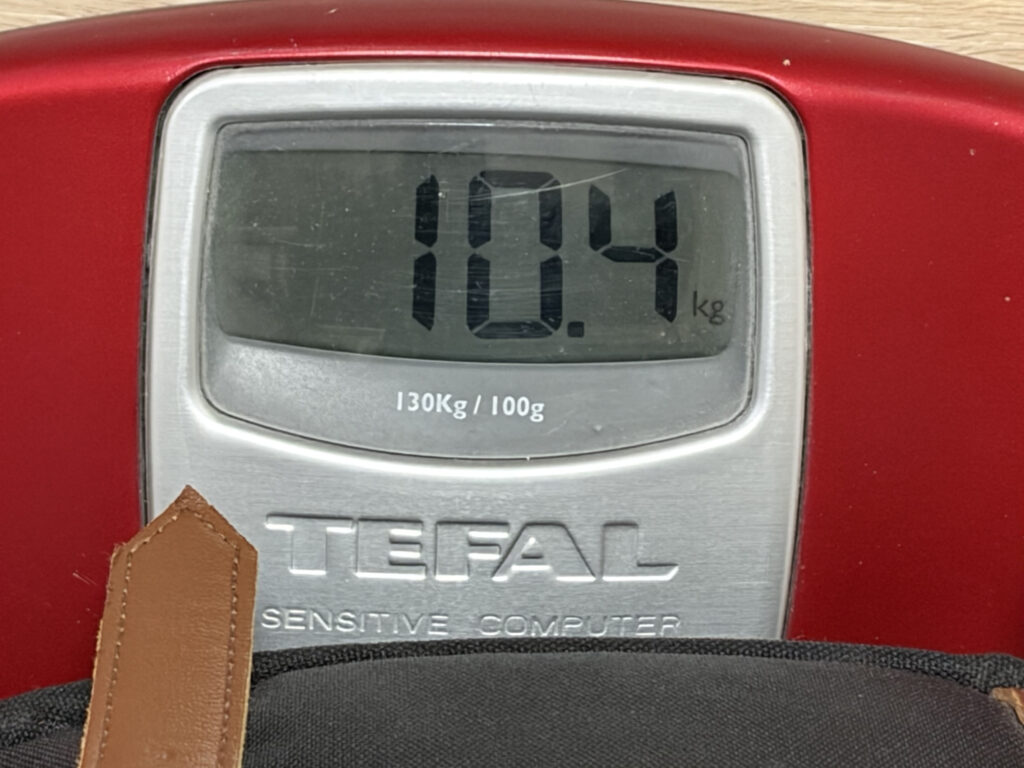
For short walks between the car and a suitable operating location, this isn’t necessarily a problem. But I certainly wouldn’t claim that the setup is ideal for long-distance hiking or demanding SOTA activations. The Herschel is an everyday backpack, and at 10.4 kg I think carefully about how far I want to carry it.
For my purposes, the main advantage is convenience. I want to be able to find a quiet location, take out the equipment and get on the air without complicated preparations. My goal is to be ready in approximately 15 minutes once I’ve found a suitable place to operate, although the actual time depends on the antenna setup and surroundings.
The antenna generally takes the most effort. I need to install the spike or tripod, assemble the aluminium sections, adjust the loading coil, extend the whip and spread out the ground radials. Once that is done, I connect the coaxial cable, power up the radio and check the SWR before transmitting.
I’ve found that having some familiar starting positions for the JPC-12 loading coil makes the process much easier. Instead of searching for the correct adjustment from scratch every time, I can normally begin close to the desired band and make smaller corrections.
Of course, the surroundings matter too. A quiet forest or open outdoor location can be attractive because it may have less electrical interference than an urban environment. I’ve experienced quite high noise levels when operating in built-up areas, which makes it particularly enjoyable to take the radio somewhere quieter.
Portable radio also gives me an opportunity to experiment. I can try different positions for the antenna, compare bands, investigate propagation conditions and learn more about how everything works together. And sometimes the reward is simply sitting outside, listening to distant stations and enjoying the fact that a complete HF radio station has come out of an ordinary backpack.
Could This Backpack Work for POTA ?
Although I haven’t used all my outdoor outings as official Parks on the Air activations, I can certainly see how my equipment could be suitable for POTA. The backpack provides a practical solution to making SSB contacts without depending on mains electricity or a permanent antenna installation.
For someone operating near a parking area, campsite or a park where only a short walk is necessary, this kind of arrangement could make good sense. The 100-watt capability of the IC-7100 offers flexibility, while the JPC-12 allows the antenna to be adjusted for different HF bands. However, I wouldn’t necessarily recommend carrying such a heavy setup if the main goal is long-distance hiking. A small QRP transceiver, a lighter battery and a compact wire antenna could be much more appropriate in that situation.
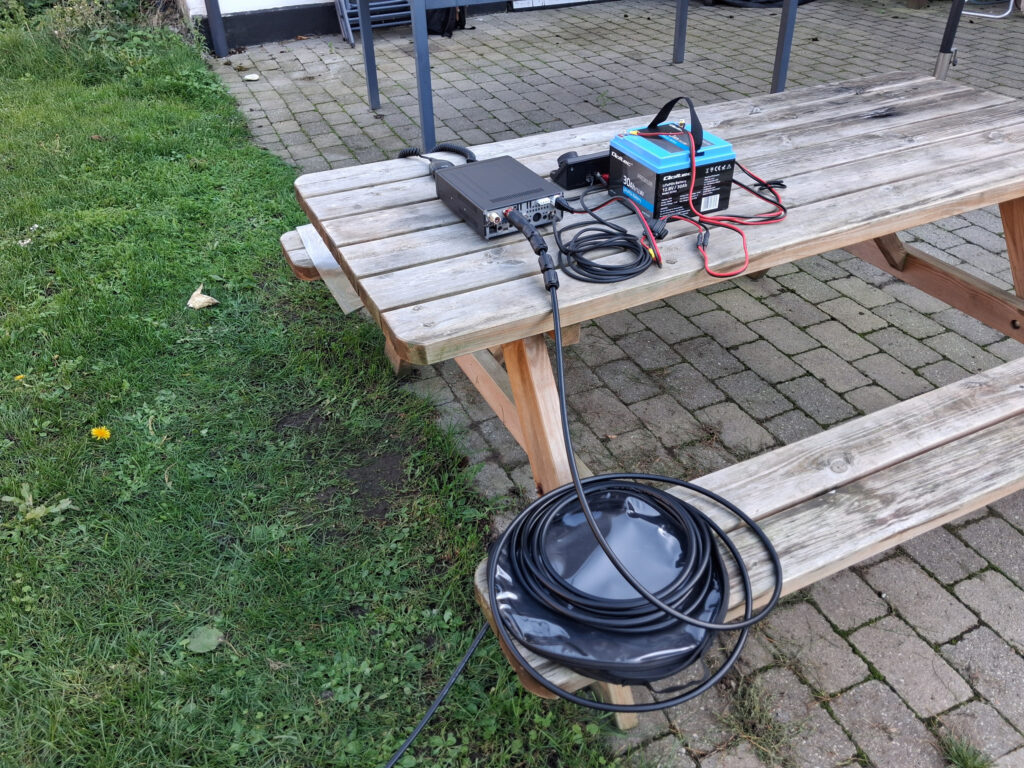
I think portable amateur radio is largely about choosing equipment that matches how you actually want to operate. Some radio amateurs enjoy working CW with five watts from a mountaintop. Others prefer making SSB contacts from a picnic table in a local park. Both approaches are interesting, and neither requires everyone to use the same equipment.
For my own operating, I enjoy the possibility of using a full-featured radio while still being able to pack everything away afterwards. And because I’m still relatively new to HF, I also enjoy the learning process. Every portable outing teaches me something about antennas, power consumption, propagation or simply how to organise the equipment more effectively.
The equipment is only one part of a portable outing; keeping track of the contacts matters too. My page about POTA voice contacts and log review covers that side of operating, while recording and reviewing ham radio QSOs explains how I use original audio to check contact details afterwards.
Final Thoughts
My portable ham radio backpack has gradually become one of the more practical parts of my amateur radio equipment. It’s not an especially sophisticated solution. I’m using an ordinary backpack, a radio I already own, a reasonably large LiFePO4 battery and a portable vertical antenna that I’ve learned to adjust through practice. But together, these components make it possible to take a complete HF station somewhere else and enjoy operating without a permanent installation.
I particularly like the combination of the Icom IC-7100 and the JPC-12 antenna. The radio gives me considerable flexibility, and the antenna makes it possible to operate from places where installing a large wire antenna would be inconvenient. The 30Ah battery means I’m not dependent on mains electricity, while keeping the cables and charger in the same backpack helps ensure that everything is ready when I need it.
There are certainly improvements I could make. A smaller radio would reduce the weight, a different battery could make the backpack easier to carry, and I’m sure I’ll continue experimenting with antennas and cables as I gain more experience. But for now, I’m quite happy with the equipment I’ve put together.
One of the most enjoyable things about amateur radio is that you don’t always need an expensive or elaborate installation to make interesting contacts. Sometimes a portable radio, a small antenna and a suitable outdoor location are enough. And the idea that I can carry almost an entire HF radio station in a 17-litre backpack still makes me smile.
I’m looking forward to more trips into the countryside, experimenting with different bands and hopefully making many more enjoyable SSB contacts from portable locations. Maybe we’ll meet on the air someday.
73 from Denmark!
Poul – OV9PL
The Portable Station Outdoors
This article is part of My Ham Radio Journey, where I share my own experiences learning about amateur radio, HF antennas, portable operating and radio equipment.